- Blog
- Guide to EV Fleet Management
Guide to EV Fleet Management
Make EV fleet management easier for your business. Learn how to control costs and source used electric cars for your fleet in Europe.
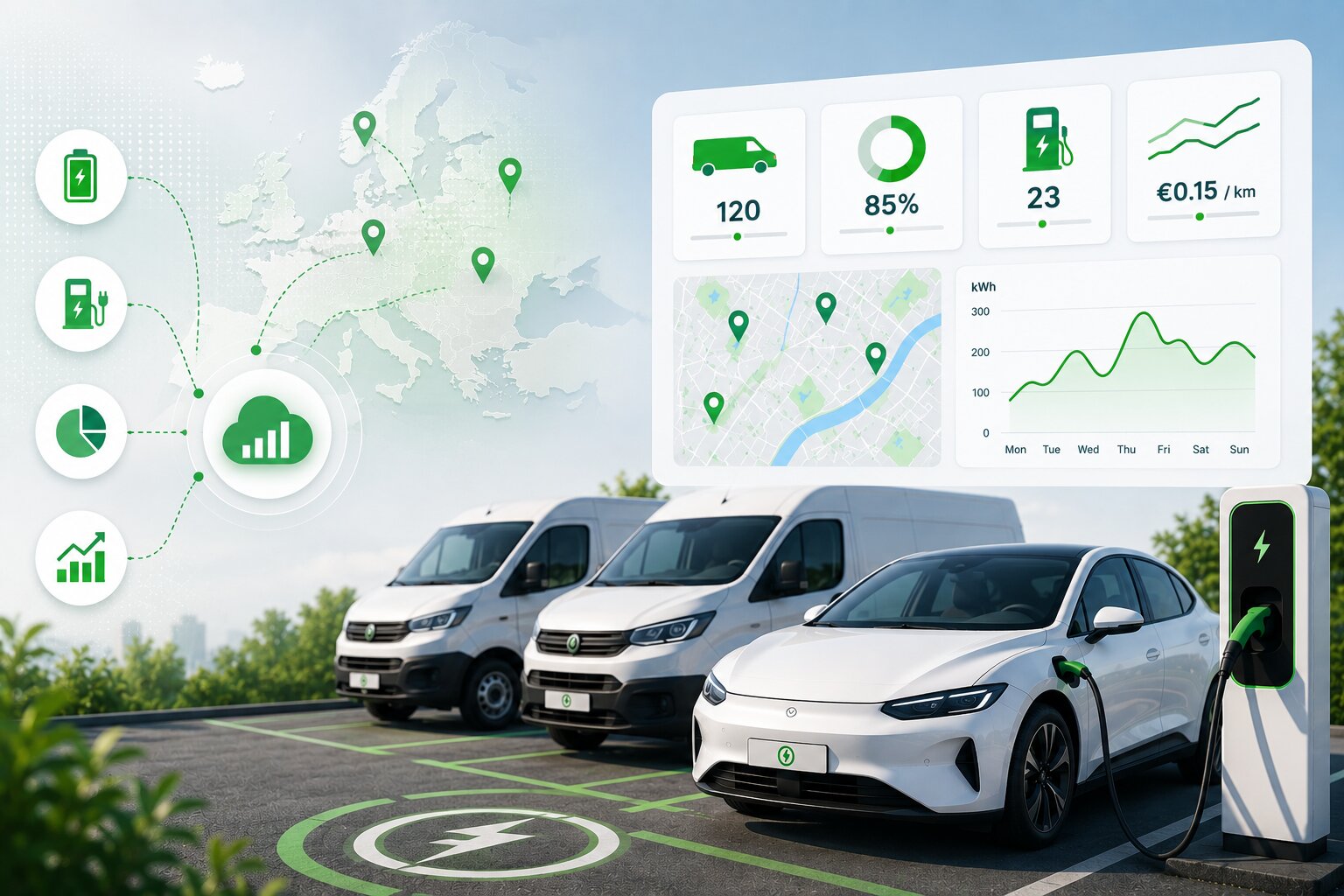
Even if you already know how to manage a petrol or diesel fleet, you’ll come across some new tasks when managing a fleet of electric vehicles.
You need to think about charging, range, battery health, software data, and energy costs differently.
Luckily, when you manage these areas well, your fleet can generate higher profits. Let’s see how you can achieve that.
The definition of electric vehicle fleet management
You buy vehicles, lease or rent them, maintain them, and keep them ready for daily work.
That’s fleet management in simple terms.
EV fleet management follows the same idea, but the cars don’t run on fuel; they run on electricity.
Because of that, EV fleet owners also need to manage how the vehicles charge and how far they can drive, among other things.
You can see EV fleets in different types of businesses, some of which are:
- Rental companies
- Taxi companies
- Leasing companies
- Companies with employee car fleets
As you can see, EV fleets are versatile, and they can work in your favor when you choose the right vehicles and manage them properly.
The outcome of poor EV fleet management
Not managing an EV fleet carefully could prevent you from getting the full value of your vehicles.
And we’re not talking about things like battery degradation here, which is a completely normal and expected part of operating EVs.
We’re talking about avoidable costs, which you can see below.
|
Avoidable cost |
What can happen |
|
Bad timing of charging |
Cars spend more time waiting and less time working |
|
Expensive charging |
Energy costs become higher than they need to be |
|
Poor route planning |
Drivers may need extra charging stops |
|
Skipped battery health checks |
You may miss the early signs of battery issues |
Fortunately, you can control most of these issues with a clear EV fleet plan and profit more from your EVs.
Differences between ICE and EV fleet management
Admittedly, EVs don’t account for much of fleets in Europe yet, even in countries with higher EV adoption rates.
Specifically, in rent-a-car fleets, electric vehicles made up only 3.8% of the market in 2024.
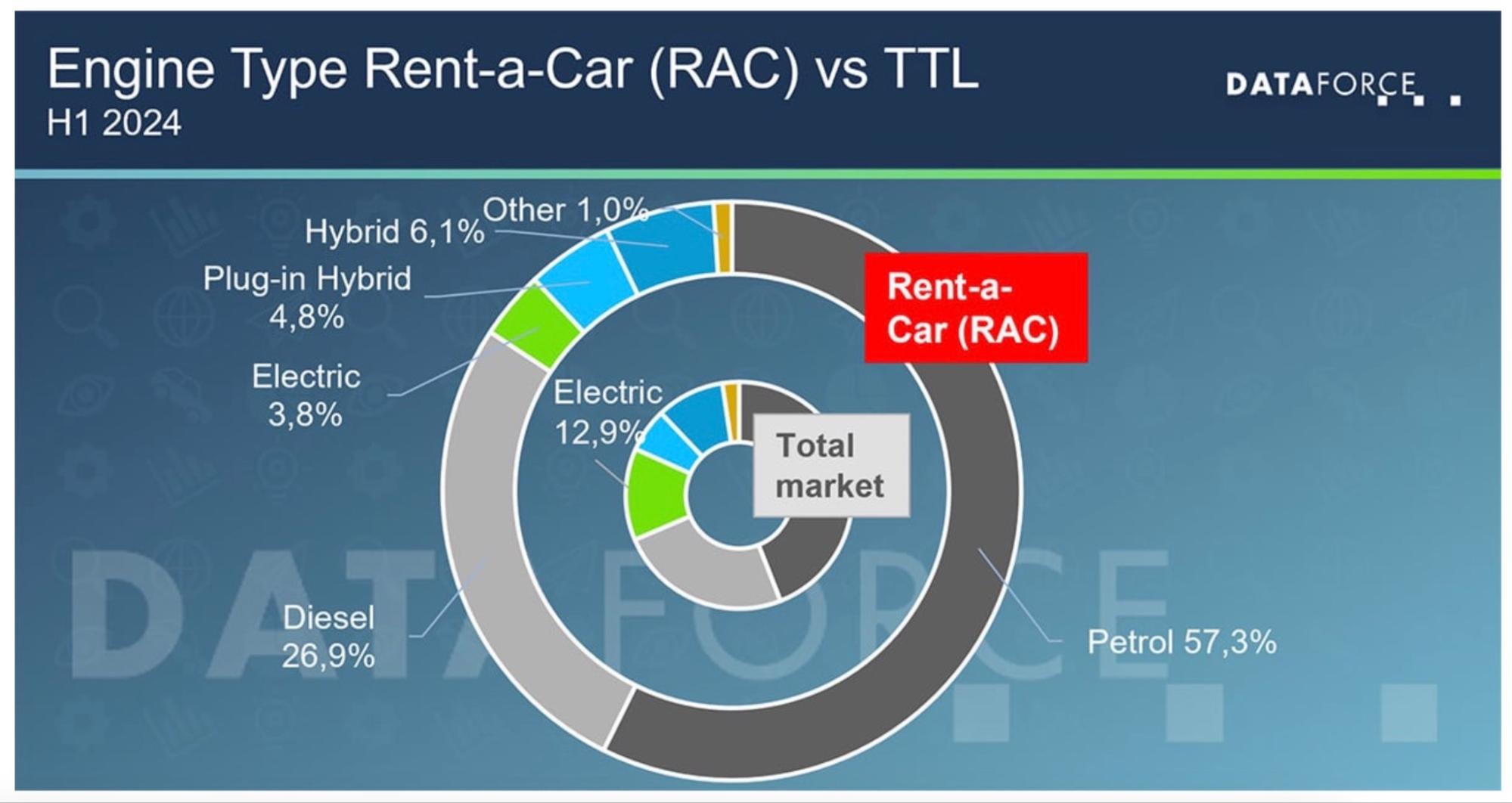
Source: DATAFORCE
That means most fleet processes are still built around ICE vehicles.
The most obvious difference is charging.
With ICE vehicles, drivers can usually refuel when they need to. With EVs, it’s better to plan where and when charging happens.
Charging, in turn, affects route planning.
You have to be a lot more careful about route planning depending on your customers.
A city taxi, a rental car, and an employee company car may all need different ranges and charging setups.
Residual value is another important difference.
For ICE cars, resale value is mostly based on age, mileage, and condition.
For EVs, battery health also plays a big role. A clear battery state of health report can make a used EV easier to evaluate when you sell it later.
As you can see, all of these differences are manageable; you just need to know where EVs need a different approach so that you can plan accordingly.
Total cost of ownership for EV fleets
Total cost of ownership, or TCO, shows the full cost of using a vehicle during its time in the fleet.
For an EV fleet, TCO usually includes:
- The cost of buying the vehicles
- Charging costs
- Charging infrastructure
- Maintenance
- Insurance
- Software costs
- EV Depreciation
- Resale value
Your TCO will also depend on the type of electric vehicle you choose. A full EV, plug-in hybrid, and hybrid can all have different charging needs and fuel costs.
The reason you should look at EV TCO carefully is that the purchase price alone won’t reflect the true cost of operating the vehicle.
EVs often have a higher purchase price. However, as PwC states, they can offer operational savings over time.
And since charging is a major part of EV TCO, it pays to plan where, when, and how your vehicles will charge before adding them to the fleet.
When you compare all these costs, TCO helps you see which EVs will deliver the best value over their full service life in your fleet.
Software solutions for EV fleets
Managing one EV is easy, but managing a fleet requires working with a lot of data to keep every vehicle cost-effective.
Software solutions can help you collect and organize the data you need more efficiently.
Let’s see how.
► Telematics and fleet monitoring
Telematics helps fleet managers track where vehicles are and how much energy they consume.
For EVs, telematics can also show battery state of charge, charging status, energy use, and battery health data.
So, if you want to know things like what cars are ready or which routes need more charging time, consider using a telematics platform that gives you a live view of your EV fleet.
One option used across Europe is Geotab, but it’s also worth looking into other providers available in your market.
► Charging and energy management platforms
Is your fleet charged at a depot, at public stations, or at home?
Wherever you charge, a good energy-management platform can help you:
- Charge when electricity is cheaper
- Avoid overloading your chargers
- Keep energy costs under control
Also, data on charging and energy helps you understand the real cost per kilometer.
This can make TCO planning more accurate.
► Integration with existing fleet operations
Most likely, your fleet doesn’t consist solely of EVs.
If you also work with ICE cars and hybrids, make sure any EV software you choose integrates well with the systems you already use.
This can make it easier to manage your entire fleet in one place, rather than switching between separate tools.
Building a charging strategy
As you’ve seen so far, charging plans have the biggest impact on how well an EV fleet performs.
So, you should approach your charging strategy carefully.
Before choosing a charging model, start with three key questions:
- Where will the vehicles charge?
- When will the vehicles charge?
- Who pays for charging?
Most EV fleets use a mix of depot, home, and public charging. The right balance depends on how your vehicles are used.
Remember, a good charging strategy should fit your daily operations, not make them more complicated.
How to source electric vehicles for your fleet?
There are many options for sourcing EVs for your fleet.
You can buy new vehicles, lease them through fleet leasing companies, buy ex-rental vehicles, source vehicles at auctions, or use used-car platforms.
Out of all these options, the best strategy depends on your budget, delivery timing, fleet size, and driver needs.
But before you choose where to source your EVs, you should decide whether new or used vehicles are the better fit for your fleet.
► New vs used: when each is a better option
New EVs can be a good option when the business needs a full factory warranty or a very specific vehicle configuration.
However, used EVs may be a better option in many other areas.
They come at a lower cost, and you can get them faster.
If you’re running a rental business, used EVs are a practical choice because customers are already familiar with many of the models on the market.
You should also consider used EVs if your business is still new to electric vehicles. This allows you to test electrification before changing the entire fleet.
So, take a look at your fleet requirements, and you’ll find the direction to follow when sourcing your fleet.
► What to check when buying used EVs
Buying used EVs is similar to buying used ICE cars in many ways.
You still need to check the usual details, like:
- Service history
- Mileage
- Tire condition
- Accident history
- Vehicle origin
- VAT and import documents
But there are some additional things to check for EVs specifically:
- Battery state of health
- Remaining battery warranty
- Charging cables
- Real-world range for your routes
These checks will help you choose EVs that fit your fleet’s daily use and avoid unexpected costs later.
► Source EVs for your fleet in bulk with eCarsTrade
If you’re equipping a fleet, you don’t want to spend time searching for and buying vehicles one by one.
eCarsTrade lets you source multiple EVs in one place so you can compare available vehicles more easily.
When you select Electric in the Fuel type filter, you’ll see hundreds of EVs currently available on auctions.
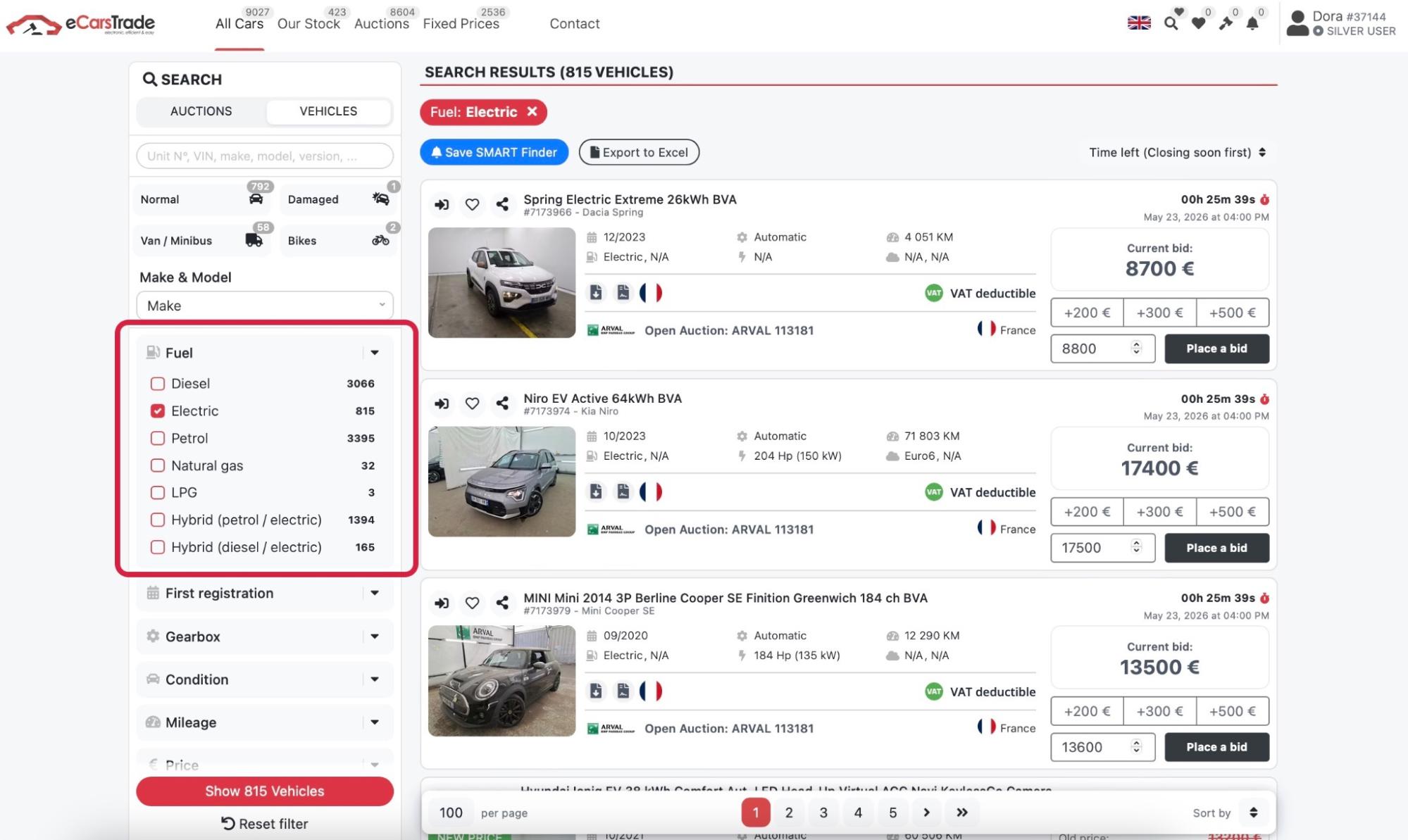
Then, you can review the vehicle descriptions, photos, and documents.
Compare the key details, and then you’ll be able to narrow down the options that fit your needs.
After you’ve placed your bids and won the auctions, the eCarsTrade Delivery Service can help you arrange transport and bring the vehicles to your chosen destination.
Incentives for businesses in Europe in 2026
EV incentives differ from country to country, so it’s best to check the rules for your own market before you buy.
Also, some incentives apply to new vehicles only, so check if you can use them when buying used EVs.
A good starting point is the ACEA EV tax benefits and incentives overview for 2026.
For each EU member state, ACEA lists tax benefits for acquisitions, ownership, and company cars, as well as purchase and charging infrastructure incentives.
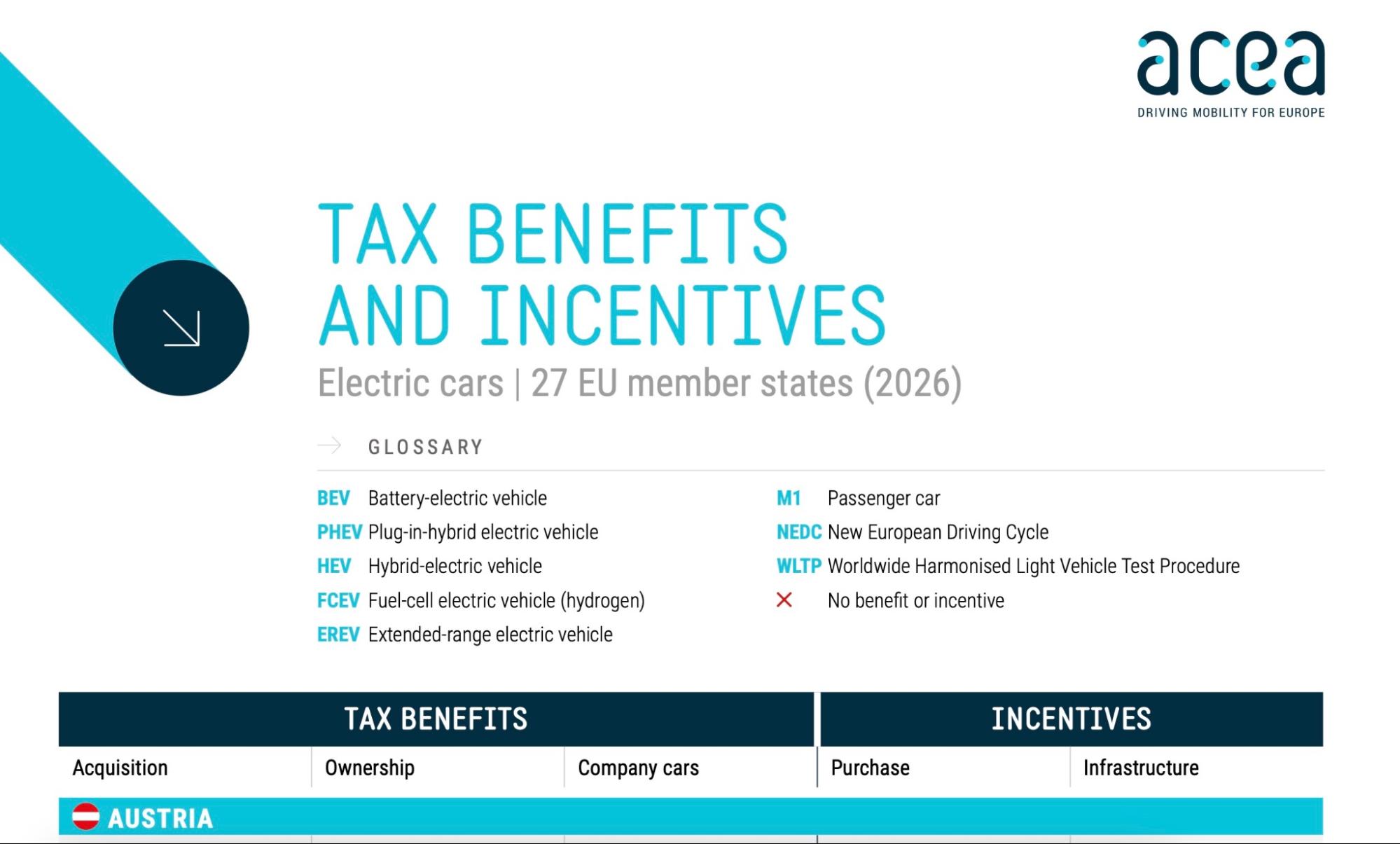
Source: ACEA
You can use this overview to see what support may apply to your fleet.
Then, check your national tax authority and transport ministry for the exact rules for new and used EVs.
That extra check is worth doing because the right incentive can lower your upfront costs and make your EV fleet investment easier to plan.
FAQ
► What battery state of health is acceptable for used EVs in a fleet?
For fleet use, you should aim for cars with a battery state of health of 80% or higher.
If the EV still covers your routes reliably and has enough battery warranty left, a slightly lower SOH may still work.
► Does the EV battery warranty transfer when a used EV is sold cross-border?
It depends on the brand, model, and warranty terms.
Kia and Nissan, for example, allow warranty transfer with cross-border coverage in many European markets, but it’s still best to check the remaining battery coverage before buying.
► How to source used EVs in the EU?
You can source used EVs through leasing companies, at auctions, or by buying ex-rental cars.
Sourcing online lets you buy EVs from the entire EU, regardless of where your business is based.
► Which EU countries offer the best electric vehicle fleet incentives in 2026?
According to ACEA, Hungary, Austria, Portugal, Germany, and Belgium offer some of the strongest EV fleet incentives in 2026.
_01JE9WH8CRTMG3B3WDH56WNJHD.png)